Hand selecting a digital indicator for process analysis and improvement

Purchasing in the Supply Chain: A Key Asset for Companies Today

Among the areas that have seen their “specific weight” increase within corporate organizations in recent decades, reaching a peak of decision-making centrality in these post-pandemic years, we certainly find the Purchasing Department.

What practical consequences does this new status achieved by Purchasing bring to companies? First, let’s take a step back and delve into the causes that led to this unprecedented centrality for an area traditionally unaccustomed to the limelight.

The Evolution of Purchasing in Supply Chain Management

It is undeniable that, starting from the 1990s, there has been a true evolution of the role of Purchasing departments in companies. Let’s retrace the main stages:

  • THE “ORDER FACTORY”. Born as an offshoot of the administrative area, the first Purchasing departments dealt exclusively with issuing and managing orders to suppliers, following instructions received from others without any kind of decision-making power. We can, with good reason, label them as “order factories,” whose goal was the mere efficient execution of order management processes;
  • THE FACTOTUM OFFICE. The experience gained in managing all aspects related to orders and the supply chain led, over time, to the expansion of Purchasing tasks. Now they were not limited to just issuing and managing orders, but, when requested, they took action to find suppliers, request quotes, negotiate prices, and discuss terms. These were, however, ad-hoc activities carried out on the less strategic part of the perimeter. Key suppliers and the most important negotiations were still managed by other entities (often the owners);
  • SUPPLIER MANAGEMENT. Thanks to verticality in processes, the perimeter managed directly by Purchasing expanded more and more, eventually including all the company’s suppliers, even the most strategic ones. The area became the focal point of supplier management, so much so that buyers are involved in and informed of all initiatives that impact the supply chain;
  • STRATEGIC SOURCING. Purchasing is responsible for the company’s supply chain and contributes to designing its medium-to-long-term strategy, thanks to the relationships established with suppliers, who have acquired the status of corporate assets. The mission of the area is to create value through the ability to choose the best partners available on the market, based on the company’s objectives.

From a simple “order factory” to a strategic entity: what are the causes that originated such an evolution?

Growing digital graph for monitoring corporate performance

The 3 Main Causes in the Evolution of Purchasing

As often happens, companies do what allows them to better respond to changes in the context in which they operate. The evolution we have seen is the natural consequence of several phenomena from recent decades:

  • SPECIALIZATION. The increase in global competition, complexity, and customization of products required by the market led to the need for company specialization, which gradually relied on expert suppliers for individual products/processes. While at the beginning of the 20th century it was not difficult to find hyper-verticalized companies (Ford owned iron and coal mines and forests for timber), today the tendency is to design and (less and less often) assemble the finished product, leaving all intermediate steps to suppliers;
  • BUSINESS CONTINUITY. With the progressive shift of production outside the company, finished products depend increasingly on the suppliers who manufacture their components. If product performance is the sum of the performance of its components, then, by extension, the company’s performance depends on the performance of its supply chain in terms of quality, technical aspects, and punctuality. A solid and precise supply chain becomes a fundamental driver for ensuring business continuity in the short and long term;
  • THE INCOME STATEMENT. Furthermore, for companies at the head of manufacturing supply chains, the shift of production toward suppliers coincides with an increase in the income statement item related to the purchase of goods and services. A figure that in 2019 weighed as much as 75.8% of corporate turnover (source: ISTAT, ATECO class C). More than three-quarters of turnover is absorbed by items related to Purchasing.

This last figure unequivocally gives us the measure of the “weight” reached by Purchasing Departments today. What, then, are the consequences for purchasing managers and procurement heads of this new balance in corporate organization?

The New Role of Purchasing in the Company: Practical Consequences

The effects are manifold and on multiple levels. Let’s look at a few:

  • PROCUREMENT VS. SOURCING. At an organizational level, one of the most common results is the separation between those who handle the strategic part of supplier management (Sourcing) and those who handle the more operational part (Procurement). This division of tasks is fundamental to “protect” strategic activities (with higher added value) from operations, which would otherwise take up all the buyer’s time;
  • THE BUYER, A MULTIFACETED ROLE. A second substantial change concerns the skills required of those who handle the more strategic side of supplier management. While on one hand it is necessary to master the technical aspect of what is being purchased, on the other, strong relationship and negotiation skills are required, without neglecting the ability for strategic thinking and project and priority management. A mix that is anything but simple to build!
  • VALUE OF PEOPLE. It is precisely this mix of skills that makes the difference. The more Purchasing gains strategic relevance, the more the area’s results (and consequently the company’s) depend on the skills of the people. A good buyer therefore becomes an asset to be protected and invested in.

Professional analyzing digital data for Supply Chain process control

Do You Want to Invest in Your Buyers’ Skills?

Makeitalia provides you with several tools for in-depth study:

  • PURCHASING TRAINING COURSES. Training days on Purchasing topics, characterized by practicality and built on Makeitalia’s experience in more than 15 years of projects and activities in the Supply Chain field, across various industrial sectors;
  • SUPPLY CHAIN GAME WORKSHOP. A day dedicated to Serious Gaming, to explore the transversality of strategic and tactical-operational decisions related to the supply chain through the use of the Supply Chain Game developed by Makeitalia;
  • MASTER BUYER PROGRAM. A dedicated path that combines training and consulting, through the practical application of methods and tools learned in the classroom to one’s own scope of action, thanks to the support of a Makeitalia Senior Purchasing Consultant.

Furthermore, if your company needs to optimize its purchasing processes and/or implement a new organization for the purchasing department, contact us without obligation through the contact form at the following link: Contact us for information.

We will be happy to listen to your needs and discuss new solutions for your company together.

Container handling in port for Supply Chain logistics management

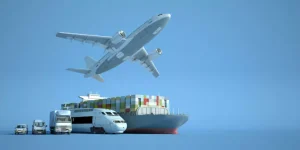
Type of Transport: The Choice Between Rationality and Contingency

Even in ancient times, freight transport was fundamental for the commercial development of every people. In more recent times, with the advent of globalization, freight transport has assumed the role of a true cornerstone of the economy.

The main types of transport currently used worldwide are: air, sea, and land. The choice among the various types of transport has always been influenced by rational considerations guided primarily by a series of drivers, such as cost, time, type of goods, and value of goods.

In this article, we present an in-depth look at the main types of transport, highlighting the advantages and objective limitations of each.

Road Transport: Strengths and Limitations

Road transport is the primary type of transport used in Italy and is the only type that allows for “door-to-door” service, both in “dedicated” and “groupage” modes.

Its strengths:

  • Reduced costs
  • Door-to-door capability
  • Reduced transit times for national and continental shipments
  • Possibility of multiple origin and destination points
  • Simplified traceability

Its limitations:

  • Problems and delays caused by force majeure (traffic, vehicle breakdowns, etc.)
  • Not suitable for intercontinental travel, due to time and cost
  • High environmental impact

Rail Transport: Strengths and Limitations

Rail transport is particularly suitable for moving large quantities of goods. It is potentially the most cost-effective, but the lack of supporting infrastructure negates this possibility, due to the need for additional movements (e.g., by road).

Its strengths:

  • Reduced costs with suitable infrastructure
  • Flexibility for the type, shape, and size of goods to be transported
  • Reduced impact of force majeure (traffic, etc.)
  • Faster than sea transport

Its limitations:

  • Need for integration with road transport due to infrastructure shortages

Sea Transport: Strengths and Limitations

Ship transport is used for long distances, especially when the goods to be transported do not have a high value and do not present a high risk of damage/perishability.

Its strengths:

  • Reduced costs over long distances compared to other transport types
  • Very high carrying capacity
  • Ability to transport dangerous goods

Its limitations:

  • High transit times
  • Need for integration with road transport
  • Traceability not always immediate
  • High incidence of force majeure

Air Transport: Strengths and Limitations

Air transport is the safest and fastest type of transport. For these reasons, it is used for urgent and/or high-value goods.

Its strengths:

  • Safety
  • Speed

Its limitations:

  • High costs
  • Limitations in terms of type, weight, and size of goods to be transported
Cargo plane in flight for freight transport and international logistics

Transport Today: The Effects of the Pandemic and the War

How are choices about the type of transport changing today, after witnessing the consequences of a pandemic and a war, whose effects are still tangible?

We know that the scarcity of some commodities and the increased demand for others has led to a rise in prices for raw materials and semi-finished products. At the same time, we have witnessed the paralysis of logistics and transport, resulting in a partial interruption of transport and delivery delays. Companies have therefore found themselves, and still are, having to combat strong pressures in supply chains and adopt completely new models in Supply Chain Management.

In light of the new situation, among the drivers to evaluate when choosing the type and means of transport today, we must consider another, the most important: availability.

The availability of the type and means of transport is not an absolute concept and varies based on the specific contingency. In just a few months, for example, we have witnessed singular and contrasting phenomena:

  • Lack of container availability departing from China, resulting in
    • uncontrolled increase in freight rates
    • delivery delays
    • adoption of alternative transport methods: intermodal with a focus on rail transport
  • Blockages of rail transport for connections between China and Europe, regarding passage through Russian territory, due to the Russian invasion of Ukraine and consequent geopolitical tensions. This has the following main consequences:
    • the search for new sea routes
    • increased costs
    • further deterioration of the global supply chain
Up arrow on KPI chart for monitoring Supply Chain performance

So, what advice can we offer today on the topic of transport to try and contain, as much as possible, delays and costs?

  • Support and encourage infrastructure development.

The potential of rail transport is not fully exploited due to a lack of infrastructure. Strengthening it would always provide a valid alternative to sea transport, leading to cost reductions.

  • Choose the most advantageous terms of delivery.

It’s not about choosing the most advantageous delivery terms for the buyer or seller, but rather allocating transport responsibility to the party with more leverage over freight forwarders, in order to gain an economic and service advantage across the entire Supply Chain.

  • Carefully select carriers and freight forwarders.

While striving not to jeopardize relationships with long-standing carriers and freight forwarders, when choosing new ones, it is advisable to consider those with financial and structural solidity, availability of means, and a variety of transport types.

  • Sign agreements with freight forwarders and review them periodically.

A written agreement always represents an additional form of protection that, in cases of reduced availability of means from freight forwarders, can truly make a difference in the level of service.

Periodic review of agreements also allows for adaptation to market changes, always seeking the most convenient solution.

It all comes down to reacting to vulnerability, which contingency sometimes forces upon us, with diversification of possibilities and flexibility.

Makeitalia: Your Ideal Partner for Freight Transport Management

At Makeitalia, we also support companies in managing and optimizing their transport operations.

If you need further information for any business requirements, please contact us without obligation through the dedicated page on our website, available at the following link: Contacts.

We will be happy to listen to your needs and chat with you, to jointly evaluate an optimal process for your company.

Furthermore, we offer a training course dedicated to Road Freight Transport. You can learn more about the program by clicking here.

Supplier evaluation with rating stars for vendor management in the Supply Chain

Evaluating Suppliers: 4 Mistakes in Vendor Rating Management

Which are the best suppliers we work with? What are the weak points of our supply chain? Where should we invest to improve supply chain performance? These questions are answered by supplier performance evaluation systems: Vendor Rating systems. These tools, starting from the data available in the company ERP, analyze supplier performance with the aim of measuring the service level received from one’s supply chain and enabling the activation of any countermeasures.

Although these systems are not particularly complex, implementing and managing them correctly is a key factor for leveraging their full potential.

Let’s look at the 4 main mistakes to avoid in their use.

First Mistake: Thinking Vendor Rating Only Concerns Quality

Vendor Rating system management is often handled by Quality departments within companies. One typical mistake that can be made is to think that such systems should be limited to measuring performance related solely to the quality of what is received from suppliers.

Vendor Rating, in fact, must evaluate all performance that the company deems critical for the service provided by its suppliers: quality certainly, but also punctuality, competitiveness, financial solidity, etc.

What is fundamental to understand is that the evaluation areas included in it will represent, for suppliers, the contexts on which they will base their perception of the service level offered to the client. There will be no room for anything else, as the very fact of having included them in such a system (to which rewards and penalties for achieving or failing to meet targets will be linked) automatically makes them a priority.

This aspect is crucial because it suggests that the performance evaluated by Vendor Rating systems should correspond to the company’s real priorities regarding the type of service expected from its supply chains. Since each company has different priorities, the best approach to define the correct mix of indicators to measure involves the participation of all potentially impacted company stakeholders, in order to develop an evaluation system that represents company needs comprehensively.

Professionals in a meeting with a growth chart for improving business performance

Second Mistake: Considering Vendor Rating Too Complicated

One consequence that could arise from involving many stakeholders in building the evaluation system is the introduction of various measurement areas, in order not to overlook any aspect of the service provided by one’s supply chain. Operationally, this translates into dozens of indicators.

This is also a mistake to avoid, as it:

  • makes the evaluation system much more complex than necessary, increasing the risk of misunderstanding with the supply chain;
  • complicates its implementation, given the volume of data (and interfaces with company information systems) required to calculate all present indicators;
  • makes it difficult to give clear priorities to the supplier, as multiple parameters are evaluated.

A good method to understand if you’ve overdone the complexity?

Once the weight assigned to each indicator is converted into % (the sum must be 100%), it may be worthwhile to consider eliminating all indicators with a weight less than 10%: they will shift the overall evaluation little, and at the same time, the supplier will give them little importance precisely because of their low weight.

Third Mistake: Not Foreseeing Any Concrete Consequences

The third mistake to avoid is to limit the use of Vendor Rating to simple measurement.

Indeed, evaluation for its own sake will hardly trigger a virtuous cycle that leads the supplier to work to improve their performance and align it with the required targets.

To create the conditions for continuous improvement, measurement must be followed by a follow-up system that motivates the supplier to adapt their performance. A fundamental element in this sense is to foresee tangible consequences for achieving certain levels or failing to meet the minimum thresholds.

Some examples (negative) are:

  • the execution of an audit to verify the causes of poor performance;
  • the prohibition of assigning new business (new business on hold);
  • the shifting of part of the purchase turnover to another supplier.

It is possible to reward suppliers who have distinguished themselves with excellent performance through:

  • awards presented at events with the suppliers themselves;
  • recognition of the level of excellence (for example, on boards specially set up in the company).

Fourth Mistake: Keeping Results to Oneself

The last mistake to watch out for concerns sharing measurement results with suppliers.

To trigger the virtuous cycle of continuous improvement, it is essential to communicate performance results as promptly as possible to your supply chain.

Frequent communication, in fact, allows the supplier to become aware of any poor performance and, therefore, to know where to work and what to prioritize.

In this sense, the frequency of sharing is important: the less time passes between poor performance and its communication to the supplier, the sooner the latter can intervene on the causes that generated it, solving the problem. Today, thanks to increasingly advanced and present digitalization in companies, it is possible to give visibility to the supply chain of its performance in real time, through portals that autonomously connect to ERP and other company systems, process the data, and make it available to suppliers in the form of a web page.

Digital interface with process icons for Supply Chain digitalization

Vendor Rating systems can truly make a difference in improving supply chain performance and identifying intervention priorities as early as possible.

It is, however, important to always keep in mind that the tool must be accompanied by a solid process, so as not to risk nullifying the investment of time and money that the implementation of such systems requires.

Makeitalia: Support in Correct Vendor Rating Management and Implementation

At Makeitalia, we also support companies in the optimal implementation and management of this supplier performance evaluation tool, in order to adopt winning Supply Chain Management strategies.

If you need further information for any business needs, please contact us without obligation through the dedicated page on our website, available at the following link: Contacts.

We will be happy to listen to your needs and chat with you, in order to evaluate an optimal process for your company together.

Hand holding a blank sheet on a desk for Supply Chain analysis and consulting activities

Temporary Management and Outsourcing: Addressing the Great Resignation

The pandemic and its effects have radically changed the rules of the game in the world of work, giving rise to the phenomenon of the so-called “Great Resignation”.

One of the most critical areas in this regard is Supply Chain Management.

Today, we present two effective tools to address the problem: Temporary Management and Outsourcing.

“Great Resignation”: What It Is and the Responses in Supply Chain Management

The term was coined to represent the exceptional wave of voluntary resignations witnessed over the past two years, which shows no signs of abating.

Some figures that frame the phenomenon:

  • McKinsey estimates that 40% of workers globally intend to change jobs in the next 4-6 months;
  • Also according to McKinsey, 64% of employers expect the problem to continue or worsen in the next six months;
  • Looking at Italy, according to AIDP (the Italian Association for Personnel Management) data, voluntary resignations among young people affect 60% of companies in our country.

This is the most evident symptom of a structural change in the relationship between employee and company, which is transversal across various sectors and is generally affecting the main global economies.

The effects of this phenomenon in companies manifest as a more or less sudden lack of personnel. When resignations occur in the same area (and perhaps in rapid succession), there is a high risk of activity paralysis.

Returning to the field of Supply Chain Management: the current historical moment is particularly complex due to a confluence of crises on various fronts, such as component shortages, difficulties in sea transport, and price tensions for various commodities (also due to the Russian-Ukrainian conflict).

If a context this critical is compounded by a lack of personnel to manage supply chain-related processes, then the conditions are created to undermine business continuity.

How to respond to the effects of the Great Resignation in such a delicate area? Temporary Management and Outsourcing can represent two effective solutions for managing the problem, respectively in the short and medium/long term.

Temporary Management: Professional Support in Case of Emergency

While staff departures normally create organizational “gaps” that can last several months, in Supply Chain Management, the problem unfortunately amplifies.

These are, in fact, business functions with complex and interconnected processes: governing them requires high professionalism and experience, factors that make the period between a person’s departure and the arrival of a new resource particularly long.

Temporary Management precisely addresses this need: to promptly provide professionals for the role, with the necessary experience for what will be a temporary assignment. The roles covered range from more operational ones (planner, expediter, buyer, to name a few) to those of responsibility and management, up to executive positions. These are the so-called “Temporary Managers”.

What makes Temporary Management so functional as an emergency tool? Here are some aspects:

  • Timeliness. One of the most tangible advantages is the speed with which the professional is available. The resource can join the company within a few days and is immediately operational;
  • Professionalism. The Temporary Manager is a professional in their role because they know the processes and tools and have the necessary experience to quickly integrate into the company’s reality and start performing;
  • Flexibility. The availability of the resource is flexible. They can be involved with a full or partial commitment, depending on the company’s needs;
  • Temporality. Last but not least is the time factor. Temporary Management is by its nature a temporary support, with the possibility of flexibly managing its conclusion, for example, to ensure an optimal handover. This aspect makes Temporary Management interesting for roles related to projects, such as that of a project buyer.

Outsourcing: Delegating Non-Core Activities to Specialists

Once the short-term contingency is resolved, it may be worthwhile to carefully evaluate one’s scope of activities to understand if everything being managed is actually core to the area. Often, in fact, there are processes or “slices” of activities that have the unpleasant characteristic of being less central to the area’s scope but absorb a significant amount of resources.

It is in these “non-core” areas that outsourcing can intervene effectively: if managing certain processes or segments that are not central to the company personally leads to a high utilization of one’s resources, why not entrust them to professionals who make it their core business?

Naturally, the choice of areas to outsource is crucial to fully benefit from the advantages of outsourcing: it is necessary to identify areas where the company is inefficient and is forced to neglect due to a lack of dedicated resources (or which require vertical skills and tools not present).

Some examples of Outsourcing in the Supply Chain:

  • Transport management (purchasing and organization);
  • Cost Engineering;
  • Purchasing and warehouse management of Class C items (e.g., auxiliary materials, indirect materials, etc.);
  • Purchase code planning.

Well-designed outsourcing brings several advantages to the company that implements it. Let’s discover them:

  • Resource Recovery on Core Activities. The first tangible result is the ability to concentrate resources on everything that is core to the company, where they can provide more added value;
  • Non-Core Activities Managed as Core. In parallel, even what is not core to the company is managed precisely and punctually. In fact, it is the outsourcer’s core business, and they have every interest in bringing efficiency to that scope;
  • Cost Variabilization. Last but not least is the benefit of variabilizing costs related to the outsourced scope, thus following the actual volume of work.
Supply Chain Process Outsourcing and Operational Activity Management

The response to the current period of great uncertainty, especially in the field of Supply Chain, involves knowing effective and reliable tools to activate in response to the criticalities that arise from time to time.

Temporary Management and Outsourcing represent, in this perspective, two precious levers available to managers to overcome contingent difficulties and regain time and resources to dedicate to the key activities of their area.

Makeitalia: Your Partner for Addressing the “Great Resignation”

At Makeitalia, since 2008, we have been involved in Supply Chain Management, supporting our clients in the management and optimization of the supply chain in various aspects, such as purchasing, logistics, planning, and quality.

Among our services, we also support companies through Temporary Management and Outsourcing. Our constant objective is to improve our clients’ performance, supporting them in managing the various aspects of the Supply Chain.

If you need further information for any business needs, please contact us without obligation through the dedicated page on our website, available at the following link Contacts.

We will be happy to listen to your needs, chat with you, and present our solutions.

Cost control for managing and optimizing business costs

Cost Engineering: 3 Common Challenges in Its Implementation

The control of procurement costs has always been a priority for businesses; a fundamental activity of Supply Chain Management. One of the most powerful tools available to companies in this regard is Cost Engineering, which, however, many companies still struggle to implement today.

Let’s look at the main challenges and some possible solutions for the correct implementation of this important and, relatively, underutilized tool.

Cost Engineering: What It Is and Why It’s Important

Cost Engineering, also known as Cost Breakdown, is a process that analyzes the value of a product in detail by dividing it into three main components:

  • Material cost: the raw material used.
  • Transformation process cost: the necessary processing.
  • Overhead costs: general expenses, both direct and indirect.

This breakdown allows for estimating the actual production costs and evaluating the supplier’s margin. Through Cost Engineering, companies can optimize:

  • procurement, which can use the analysis results to evaluate supplier margins and initiate negotiations for cost reduction, in addition to gaining awareness of the cost structure, both of suppliers and of the goods purchased from them;
  • the technical area, which benefits from the data to improve its cost estimates during the design phase, making it easier to scout for suppliers that align with the costs hypothesized in the project.

The benefits of structuring a Cost Engineering process are therefore significant.

Let’s now delve into the 3 main challenges a company may face in its implementation.

Cost analysis and economic control in Supply Chain processes

First Challenge of Cost Engineering: A “Know-how Intensive” Process

The first challenge related to Cost Engineering is that it is a process that intrinsically requires a high level of expertise on two fronts: technical and cost-related.

On the one hand, performing a breakdown analysis requires a significant knowledge of the product being analyzed and the techniques needed to produce it. There is a need to estimate a production cycle (with its related technologies) and to be able to evaluate processing times. This is often a major initial obstacle for companies that do not have this kind of expertise internally.

However, a second aspect should not be underestimated: the correct cost evaluation (of material, for example, or transformation processes in €/hour) also requires specific skills. Frequently, companies rely on values considered “market values,” taken from generic sources or based on the experience of the analyst, making significant errors and approximations that can lead to inconsistent results.

Second Challenge: The Need for a Shared Method for Cost Engineering

A second point, often critical even for companies already practicing Cost Engineering, relates to defining the analysis and calculation method.

Indeed, it should be:

  • shared among all involved company stakeholders, to facilitate simple interpretation of results;
  • flexible, to adapt to supply chains with very different characteristics;
  • rigorous in its calculation steps, to be solid in discussions with suppliers.

The method is a key aspect for the comparability of analyses performed and, above all, for the continuity of the costing process.

Unfortunately, it is not uncommon for companies to rely entirely on the experience of their analysts, without seeking to structure the analysis process. This choice entails significant risks, such as:

  • the loss of accumulated know-how over time, should an analyst leave the company;
  • the non-comparability between analyses by different analysts using different methods and tools;
  • the missed opportunity to leverage data and experience accumulated over time.

A clear and shared method, conversely, creates the opportunity to digitalize the process, fostering data sharing and structuring, unifying the calculation process, and simplifying the analyst’s work.

Third Challenge in Introducing Cost Engineering: A Cultural Shift

Finally, the most important aspect of all: introducing Cost Breakdown logic into companies requires a strong cultural change, especially within Procurement organizations.

Indeed, the implementation of these types of processes necessitates a maturation on the part of the buyer, who must be able to “reinvent” their approach to discussions with suppliers: from a purely negotiation-based one to a technical one, based on objective elements.

This important evolutionary step in the buyer’s growth must necessarily be accompanied by a growth in skills, necessary to prepare complex, fact-based negotiations with strong technical content. This is not a foregone evolution; it requires a certain predisposition from the personnel involved, who must be given the necessary time for this transition.

Therefore, there are several obstacles on the path of a company that wants to implement a Cost Engineering process; however, the results obtained once it is fully operational far outweigh the efforts made.

So, how can these challenges be overcome, and how can one benefit from the results that Cost Engineering can bring? The key rule is not to improvise, but to build, step by step, competencies and methods with the support of those who master the subject and can set the process on solid foundations.

KPI analysis and performance monitoring in the Supply Chain

Makeitalia: A Partner for Cost Engineering Implementation

Makeitalia, a company whose core business has been Supply Chain and supply chain management for over 13 years, can be your ideal partner for implementing Cost Engineering.

Alongside our clients, we have supported various companies in Cost Breakdown projects, both in the Assessment phase and in the executive phase, achieving the set results together and realizing ideas.

Furthermore, we offer companies a dedicated training course specifically on Cost Breakdown analysis, with the aim of deepening this analytical methodology that allows for understanding, in detail, the cost structure of a specific component or product and identifying the correct market price.

If you need to delve deeper into the topic for business and/or training needs, contact us without obligation through the dedicated page of our website, available at the following link Contact Us.

We will be happy to listen to your needs, chat with you, and present our various solutions.

Digital charts and data analysis for Supply Chain performance monitoring

Material Planning: How to Respond to the Challenges of the New Normal?

In the Supply Chain Management and supply chain management sector, does a possible solution exist today to manage a modern material planning process?

Is it possible to act on the critical issues that the tool still most widely used by companies today, the so-called MRP (Material Requirement Planning), shows in the current context?

Makeitalia’s answer is “Yes,” a solution exists. Let’s discover it together in this new article.

A VUCA World: What Is It?

We live in times where the only certainty is represented by uncertainty and by the continuous change of the context in which companies operate. On one hand, there are the opportunities that digital innovation, globalization, and emerging technologies have brought to the markets. On the other hand, there are increasingly more discontinuities along supply chains generated by so-called “black swans,” such as the pandemic, geopolitical imbalances, and so on.

A scenario of this type corresponds precisely to what Burt Nanus (University Professor at the University of Southern California) and Warren Bennis (management consultant) back in 1987 defined as a V.U.C.A. scenario, a model characterized by:

  • V – Volatility. Meaning a high variability of phenomena, both from the point of view of their extreme values (more catastrophic events) and the frequency of occurrence.
  • U – Uncertainty. Meaning the scarcity or complete absence of useful information for managing phenomena.
  • C – Complexity. Meaning the greater interrelation between the elements of the system (think, for example, of a modern supply chain).
  • A – Ambiguity. Meaning the difficulty of interpreting the continuous evolution of the scenario due to its unpredictability.

MRP: Can a Tool from the 60s Still Be Effective?

It is difficult to think that, in a scenario like the one painted by the VUCA model (unfortunately more than confirmed in the recent past), tools conceived over 50 years ago can still exist and be widely used today.

Yet, if we look at material planning processes, it is so: Material Requirement Planning, better known as MRP, is still the most widely used planning tool in companies today.

Credit must be given to Joseph Orlicky, the IBM engineer who developed MRP in the 60s, for having designed a system that, at the time, revolutionized industrial production thanks to its solidity and precision.

Unfortunately, the strengths of MRP (rigidity and precision) are destined to show their weakness in a VUCA-type context, characterized by poor reliability of information and the need for flexibility, with effects such as:

  • Perfect incorrectness. The need for MRP to have forecasts as input to generate material requirements clashes with the poor reliability of the forecasts themselves. The result is that MRP generates plans and requirements precise to the single piece, but based on data that is wrong by definition—an unreliable forecast.
  • Amplification of the bullwhip effect. The continuous need to update the forecast (to have the least “dirty” data possible available) then involves a continuous revision of orders toward the supply chain. The relative distortion of demand perceived by upstream actors triggers the so-called “bullwhip effect,” whereby a minimum variation in downstream demand propagates upstream with amplified variations.
  • High manual rework. The continuous modifications of plans and orders generated by MRP (due to the updating of forecast data) usually determine the need for manual corrections by the planner. This high manual rework (already risky in itself) sometimes leads to rejection by the planner: in the long term, in fact, it is not uncommon to see other parallel “home-made” tools and/or “safety” stocks arise to cope with this significant operational workload.

An immediate consequence of these effects is experienced in inventory turnover, finding oneself in a situation of bimodal inventory distribution: excessively high quantities of little-used components and a lack of availability of frequently requested components.

Returning to the initial question: how is it, then, possible to manage a modern material planning process that acts on the critical issues that MRP shows in the current context?

Glasses and documents on a desk for Supply Chain analysis and planning activities

DDMRP: A Possible Solution

One answer to this complex problem is provided by the DDMRP (Demand Driven MRP) system, which was created precisely with the intent of overcoming traditional MRP, providing a package of tools designed to plan in a VUCA context.

Let’s look at some principles and tools of this solution:

  • Demand Driven. Producing and ordering only in response to requirements triggered by real sales orders, without therefore having to rely on demand forecasting to trigger orders.
  • Decoupling buffers. Exploiting decoupling stocks to manage all cases in which there is not enough time for procurement or production, shortening lead time and protecting the rest of the supply chain from demand nervousness.
  • Dynamic adaptation. Managing buffer sizing in an adaptive manner, so as to react to changes in the context without the need for human intervention.
  • Transparent execution. Increasing visibility on the supply chain through simple-to-interpret “visual” indicators and alerts, which give visibility over the entire system and allow for the timely management of critical issues according to an objective priority.

A correct implementation of DDMRP allows for several concrete benefits.

Which ones?

  • Reduces forecasting errors, which often lead to stock shortages or excesses.
  • Shortens lead time, thanks to the exploitation of the decoupling buffer concept.
  • Optimizes inventory, guaranteeing the right level of stock based on the parameters used to manage the system’s adaptivity.
  • Brings ease of use and visibility regarding critical issues.
  • Makes the planning process solid, eliminating those drifts that lead planners to use Excel and adopt “lateral” solutions.
Hand selecting elements in sequence for business process optimization

Do You Want to Learn More About DDMRP Methodology and Tools?

Makeitalia provides you with several options for further study:

  • White paper. Download our white paper to delve into the fundamental concepts of the method.
  • The opportunity to experience DDMRP firsthand: an introductory day in which we will combine basic training with the possibility to use the method and concretely appreciate its strengths, comparing it with traditional planning. For information, contact us, without obligation, by clicking here.
  • Curious to understand what the benefits of introducing DDMRP in your company could be? Makeitalia provides you with a simulation to calculate the potential impacts in terms of service level and inventory turnover. For information, contact us, without obligation, by clicking here.
  • DDPPTM training course and exam. Participate in the official course developed by the Demand Driven InstituteTM to acquire skills on DDMRP and obtain the Demand Driven Planner ProfessionalTM certification. Discover the course program and request registration by clicking here.

Furthermore, if your company needs to analyze its processes and evaluate possible alternative solutions to the current planning systems used, contact us, without obligation, through the contact form at the following link: Contact us for information.

We will be happy to listen to your needs and discuss new planning solutions for your company together.

Graphic image of a network of connections.

How to Evaluate Your Company’s Supply Chain Efficiency

In an increasingly competitive industrial landscape, measuring your Supply Chain’s efficiency is not just good practice: it’s a strategic lever. Too often, companies rely on subjective perception or partial reports, missing the opportunity to act in a structured, data-driven manner. This article provides a concrete approach to understanding if your logistics flows are truly working: which KPIs to monitor, which signals not to ignore, and which tools to adopt for improvement.

This is not a theoretical guide, but an operational contribution designed for Supply Chain managers and professionals, developed from real experiences in complex production environments. If you want to know if your Supply Chain is truly efficient, you’ve come to the right place.

Why Evaluating Supply Chain Efficiency Is Crucial

Direct Impact on Costs and Competitiveness

Accurately evaluating your Supply Chain’s efficiency means addressing one of the company’s main economic drivers. An underperforming logistics chain directly impacts operational costs, delivery times, service levels, and ultimately, the company’s competitiveness. Conversely, a well-structured Supply Chain allows for waste reduction, resource optimization, and a more predictable and robust customer service.

Often, inefficiencies do not manifest explicitly but translate into systemic phenomena: out-of-control stock, chronic line shortages, unexpected overloads, or unpredictable lead times. Only an objective and continuous analysis allows for intercepting and correcting these distortions before they turn into actual bottlenecks.

Difference Between Managed Flow and Optimized Flow

A fundamental distinction to keep in mind is that between a “managed” Supply Chain and an “optimized” Supply Chain. In the former, processes are monitored but not always efficient; in the latter, every activity is designed to maximize value and reduce complexity. Too often, companies settle for simple operational oversight without truly questioning the efficiency of internal flows.

Adopting an approach based on measurable KPIs, systematic audits, and continuous improvement logic is the only way to transform the Supply Chain from a cost center into a competitive lever. And it all starts with a correct and structured evaluation.

Illustration with KPI written on it.

Strategic KPIs for Measuring Supply Chain Efficiency

How to Choose Truly Significant KPIs

Key Performance Indicators (KPIs) represent the objective language through which Supply Chain performance is evaluated. However, not all KPIs are relevant for every business context. The selection must be consistent with the organizational model, process type, and business objectives. Generic indicators can provide a distorted or incomplete view, while well-designed KPIs guide improvement and enable faster operational decisions.

It is essential to adopt metrics that measure flow effectiveness, customer responsiveness, and internal efficiency. Relying solely on warehouse or purchasing data can be misleading: an integrated reading of logistical, qualitative, and production parameters is needed.

Concrete Examples of Logistics and Service Indicators

Among the most strategic KPIs for a realistic supply chain evaluation, we find:

  • OTIF (On Time In Full): measures the punctuality and completeness of deliveries, highlighting any misalignments between planning and operational reality.
  • Procurement Lead Time: useful for monitoring the responsiveness of the supplier network.
  • Inventory Turnover Rate: indicates how effectively warehouses are managed.
  • Total Logistics Cost per Unit Sold (Cost to Serve): helps understand the economic efficiency of end-to-end processes.

These indicators, when continuously monitored and integrated into customized dashboards, become essential decision-making tools for every operations manager.

Assessment and AS-IS Analysis: Mapping Flows to Understand Where to Intervene

What Is a Supply Chain Assessment and Why Do It

A Supply Chain Assessment is a structured process that allows for photographing the current state of a company’s logistics and production flows. Through this analysis, inefficiencies, bottlenecks, and low-value-added areas are identified. It is not a simple documentary review: an effective Assessment is a field activity, conducted through interviews, direct observation, and analysis of operational data.

The objective is not to assign blame, but to create a functional and objective map of processes, to make often underestimated criticalities visible. In this sense, the Assessment represents the first concrete step towards lasting and measurable improvement.

Tools for Identifying Structural Inefficiencies

During the Assessment, methodological tools such as historical KPI analysis and flow classification according to operational priority criteria are used. Techniques like the SIPOC diagram or the ABC method for materials are fundamental for understanding the real dynamics within the organization.

Many inefficiencies stem from poorly formalized processes, outdated parameters in management systems, or fragmented communication between departments. A clear mapping allows for visualizing these critical nodes and defining corrective actions in a structured way. Only by knowing the starting point can an effective and sustainable TO-BE path be defined.

Graphic representation of a network of connections.

Optimization Strategies and Continuous Improvement

Lean Approach and Process Review

Optimizing the Supply Chain means applying a systemic approach to improvement, based on lean principles and simplification logic. It is not about implementing technological solutions tout court, but about redesigning processes to eliminate waste, reduce lead times, and improve synchronization between demand and production.

An effective optimization path always starts with a clear identification of objectives (costs, service, flexibility) and involves all company levels. Cross-functional involvement ensures that improvement actions are truly sustainable and do not remain on paper. Projects like DDMRP or the implementation of Kanban models can represent concrete solutions, if correctly contextualized.

The Role of Digitalization in the Supply Chain

Digitalization is not an end, but a means to increase process transparency and efficiency. The introduction of digital tools, such as interactive dashboards, advanced planning systems, or collaborative platforms with suppliers, allows for real-time management of KPIs, alerts, and performance.

Furthermore, predictive analytics applied to the Supply Chain allows for anticipating anomalies, estimating needs, and optimizing inventory. The key is not to be driven by technology, but to use it strategically to support data-driven decisions. Effective optimization never happens by chance: it is the result of structured, validated, and constantly monitored choices.

When to Rely on External Support to Evaluate Efficiency

Advantages of Specialized Operational Consulting

Evaluating Supply Chain efficiency requires cross-functional skills, field experience, and advanced analytical tools. Relying on an external partner allows for obtaining an objective, independent, and highly professional view. The specialized consultant does not merely identify criticalities but proposes structured solutions, designs realistic TO-BE scenarios, and supports the implementation of corrective actions.

In Makeitalia’s case, the approach is strongly results-oriented: AS-IS analysis, TO-BE definition, concrete implementation. Each intervention is calibrated to the client’s specific needs, with the aim of transforming data and observations into tangible improvement. Consulting is not a cost, but a strategic investment to regain efficiency and competitiveness.

The Value of Comparison with Experts and Industry Benchmarks

One of the most underestimated, yet strategic, elements is the value of comparison. An expert team brings with it best practices validated in dozens of different contexts, industry benchmarks, and already tested methodologies. This allows for accelerating implementation times and avoiding recurring errors.

Furthermore, working with external support means moving beyond a self-referential view, often limited by internal habits. Comparison generates learning, fosters cultural change, and strengthens control over the supply chain at every node. For this reason, more and more companies are choosing operational support to aid their transformations.

Where to Start? Request a Guided Evaluation

If, after reading this article, you realize that your Supply Chain is managed but not yet optimized, now is the right time to intervene. A professional evaluation is not just the first step towards efficiency, but a concrete tool to precisely identify where to act, with what priorities, and through which operational levers.

Immediate revolutions are not necessary: just start with the right data, with expert support by your side. Whether you are an operations manager, a planner, or a purchasing director, our team can help you transform analysis into action, in a measurable and progressive way.

Request a consultation to initiate an Assessment of your Supply Chain. You will be supported by specialists with field experience, validated methodologies, and an operational approach focused on results. Your Supply Chain can become a strategic lever. The first step depends on you.

Makeitalia S.r.l. a Socio Unico
Via Jan Palach, 55 41122 Modena
VAT No: 03213690369
Company Register: MO – 368378

Makeitalia © 2026 | All Rights Reserved | Cookie Policy | Privacy Policy | Video Surveillance Privacy | Organizational Model 231